

News Summary
Tennessee businesses and farmers are struggling due to the impact of trade war tariffs, with an 80% tariff on Chinese imports severely affecting local companies. Many business leaders report negative effects, resulting in increased consumer prices, particularly in food. The soybean farming sector is especially vulnerable, facing projected losses, while the closure of aluminum factories adds further uncertainty. Despite these challenges, a majority of business leaders remain hopeful about the state’s economic future, citing strong investments and government support as positive factors.
Tennessee is grappling with significant economic challenges as businesses and farmers face the impact of ongoing trade war tariffs and economic uncertainty. The global trade war, initiated by President Donald Trump in February, has led to numerous tariffs that have created an unpredictable business environment, particularly for Tennessee’s industries.
In mid-September, Greg Asadourian, a businessman in Tennessee, received a notice from the U.S. Department of Homeland Security indicating an 80% tariff imposed on a shipment from China. This steep increase in tariffs means that Asadourian’s company, Allvan, faced an extraordinary tax burden. For a purchase order worth $14,413, his company incurred $11,977 in tariffs. This unexpected financial strain has forced Asadourian to take precautionary measures; a steel supplier has begun pre-charging for anticipated tariff costs.
According to the University of Tennessee Boyd Center for Business and Economic Research, approximately 75% of business leaders in Tennessee have reported negative impacts from tariffs. A significant portion, about half, are passing these cost burdens onto consumers. Consumer prices have already begun to reflect these tariff costs, with grocery prices increasing notably. For example, food prices saw a 0.6% increase in August, marking the fastest monthly rise since October 2022. Additionally, coffee prices have surged due to tariffs on beans from major sources like Colombia, Ethiopia, and Brazil.
Another facet of the trade turmoil is the effect of new tariffs implemented on August 1, which targeted products from over 90 countries, including wine and spirits. This has raised industry expectations for further price increases. A range of food items from China, such as fruits, vegetables, and shrimp, have also seen price hikes, contributing to the rising cost of living in Tennessee.
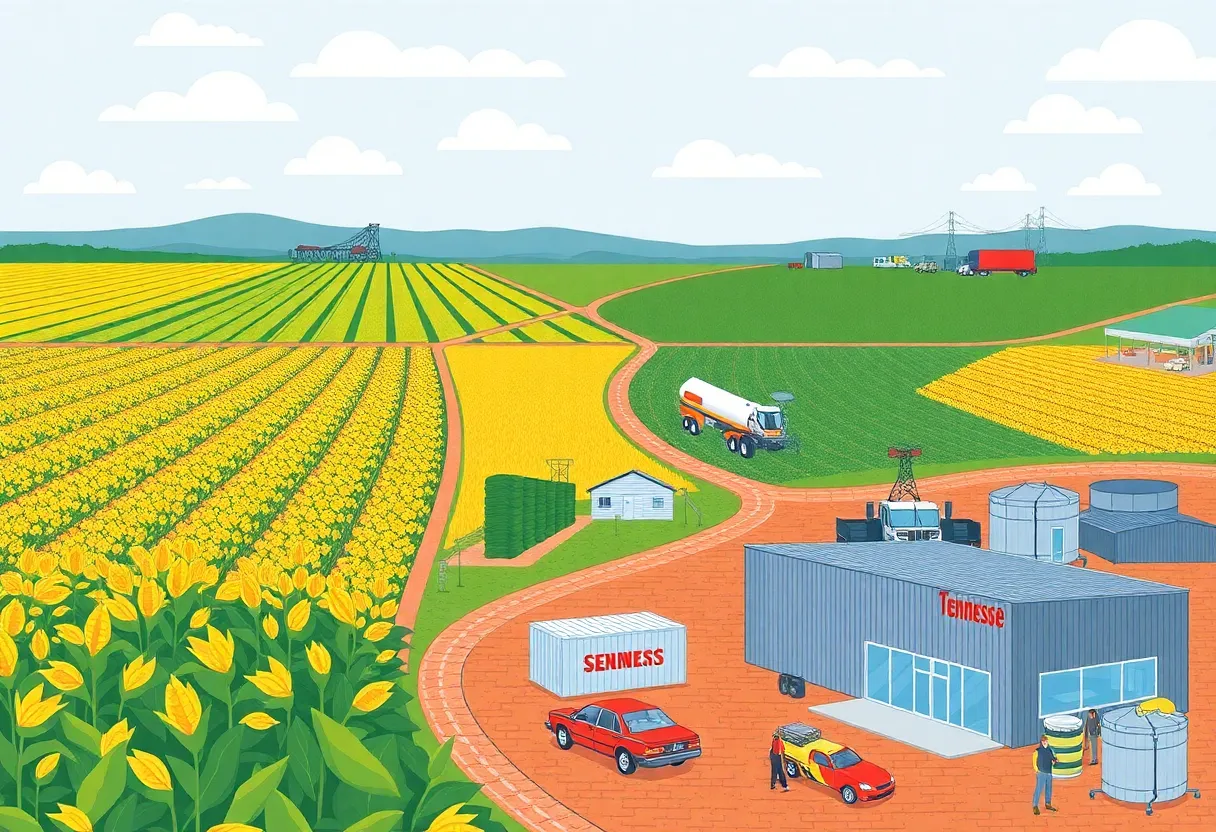
Tennessee’s soybean farmers are particularly feeling the strain of the current economic climate. In 2025, farmers plan to cultivate approximately 1.75 million acres of soybeans; however, poor weather conditions and inflation, coupled with adverse trade negotiations with China, threaten their financial viability. Economists from the American Soybean Association indicate that U.S. soybean farmers collectively faced losses of $9.4 billion during earlier trade tensions in 2018, while Tennessee producers are projected to lose nearly $110 million in 2025 due to unfavorable circumstances.
Compounding these difficulties, the closure of one of the four U.S. aluminum factories, which was due to a fire, has made it imperative for businesses to seek alternative suppliers, intensifying the challenges faced. This added pressure has resulted in further uncertainty for farmers as they navigate the challenges of the current harvest season and prepare for future planting seasons amid looming financial instability.
The lack of a new Farm Bill since 2018 exacerbates the situation, leaving farmers without crucial safety nets. Young farmers often find themselves particularly vulnerable due to inadequate equity, making it harder to withstand economic challenges. There is a growing need for support from federal government programs as farmers advocate for assistance in navigating these tough market conditions.
Despite facing formidable hurdles, 69% of business leaders maintain an optimistic outlook about Tennessee’s economic future, attributing confidence to robust investments and effective government leadership. Yet, as businesses strive to adapt and farmers manage their crops amidst financial uncertainty, the long-term impacts of trade policies and economic fluctuation remain a critical concern for many in the state.
Deeper Dive: News & Info About This Topic
- Tennessean: Tariffs and Tennessee Businesses
- Tennessee Lookout: Soybean Farmers in Crisis
- Axios: Tennessee Tariffs on China Imports
- Fox 13 Memphis: Business Leaders on Tariffs
- Financial Times: Economic Impacts of Tariffs
- Wikipedia: Trade War
- Google Search: Tennessee Economy
- Google Scholar: Tennessee Tariffs
- Encyclopedia Britannica: Tennessee
- Google News: Tennessee Trade War


Author: HERE Nashville
The NASHVILLE STAFF WRITER represents the experienced team at HERENashville.com, your go-to source for actionable local news and information in Nashville, Davidson County, and beyond. Specializing in "news you can use," we cover essential topics like product reviews for personal and business needs, local business directories, politics, real estate trends, neighborhood insights, and state news affecting the area—with deep expertise drawn from years of dedicated reporting and strong community input, including local press releases and business updates. We deliver top reporting on high-value events such as CMA Fest, Bonnaroo Music & Arts Festival, and Nashville Pride Festival. Our coverage extends to key organizations like the Nashville Area Chamber of Commerce and Nashville Health Care Council, plus leading businesses in healthcare, automotive, and technology that power the local economy such as HCA Healthcare, Bridgestone Americas, and Asurion. As part of the broader HERE network, including HEREBristol.com, HEREChattanooga.com, HEREKnoxville.com, and HEREMemphis.com, we provide comprehensive, credible insights into Tennessee's dynamic landscape.